






×
Get a Quote

Conversion of house into HMO, rear extension and roof extension

Development Type

Change of use
HMO (Houses in Multiple Occupation)
Roof extension/ loft conversion
Single storey extension

Borough

Islington

67 Kingsdown Road, London, N19 4LD

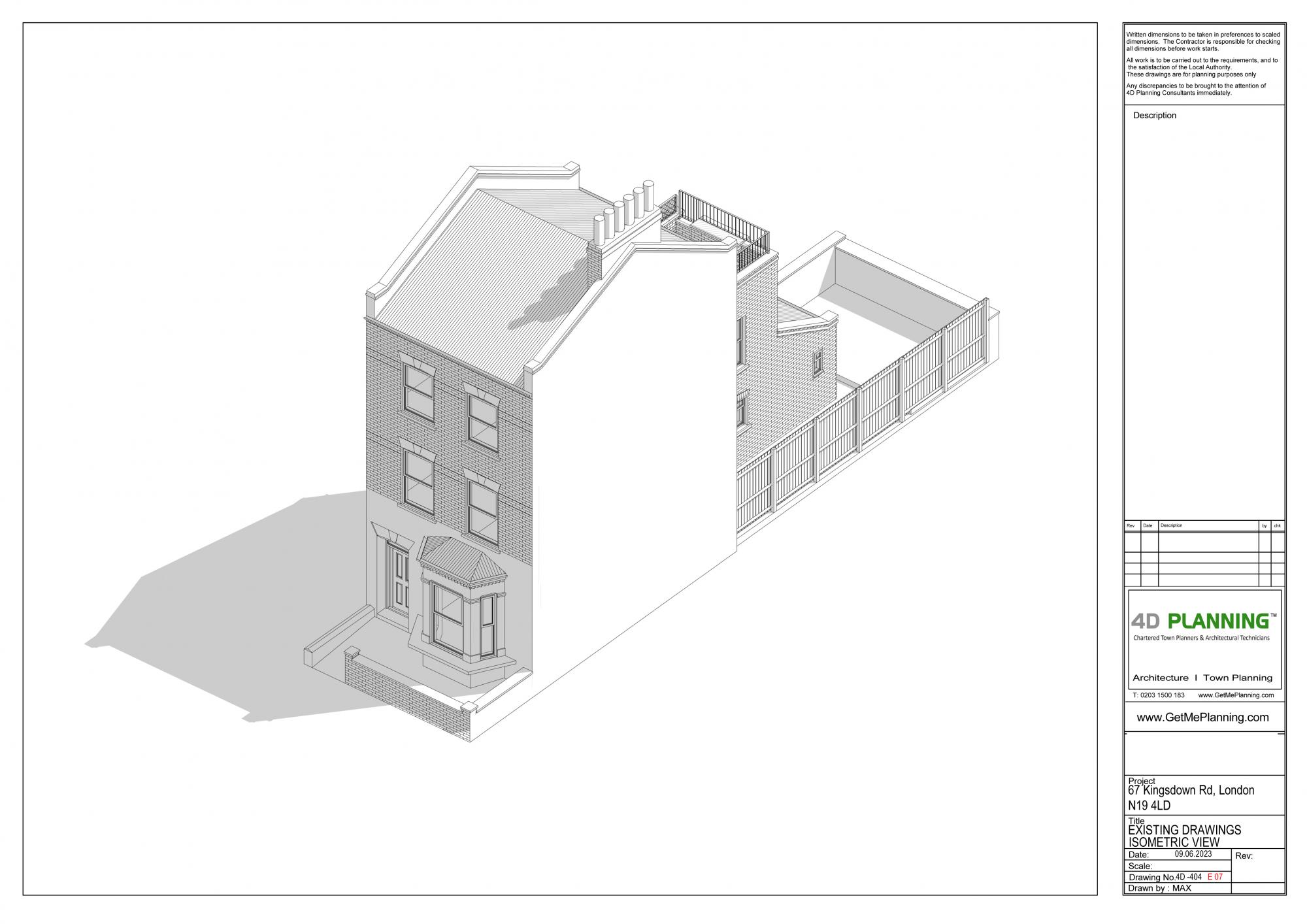
Before

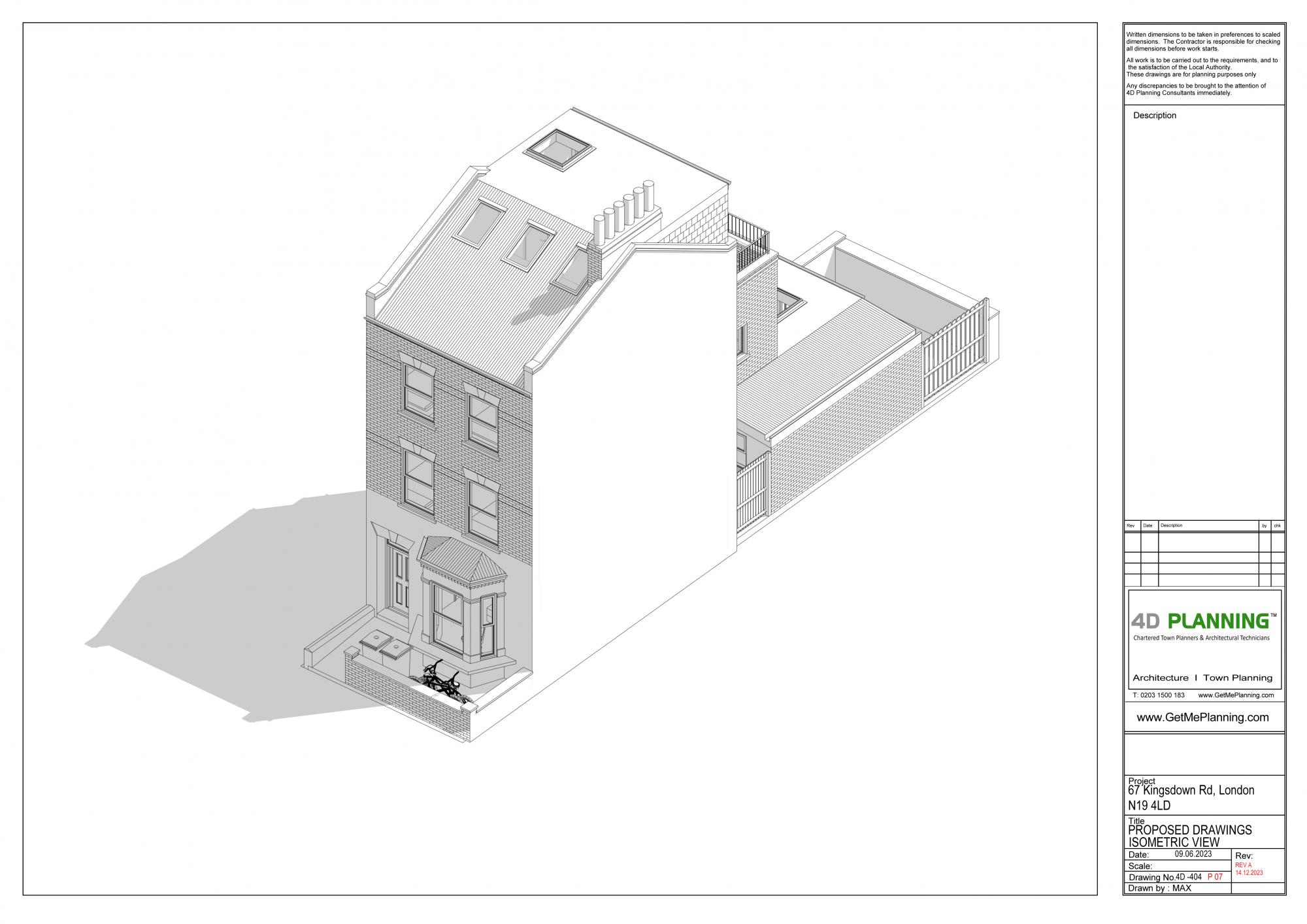
After

Development Type

Conversion to HMO, rear extension, roof extension


Proposed Development

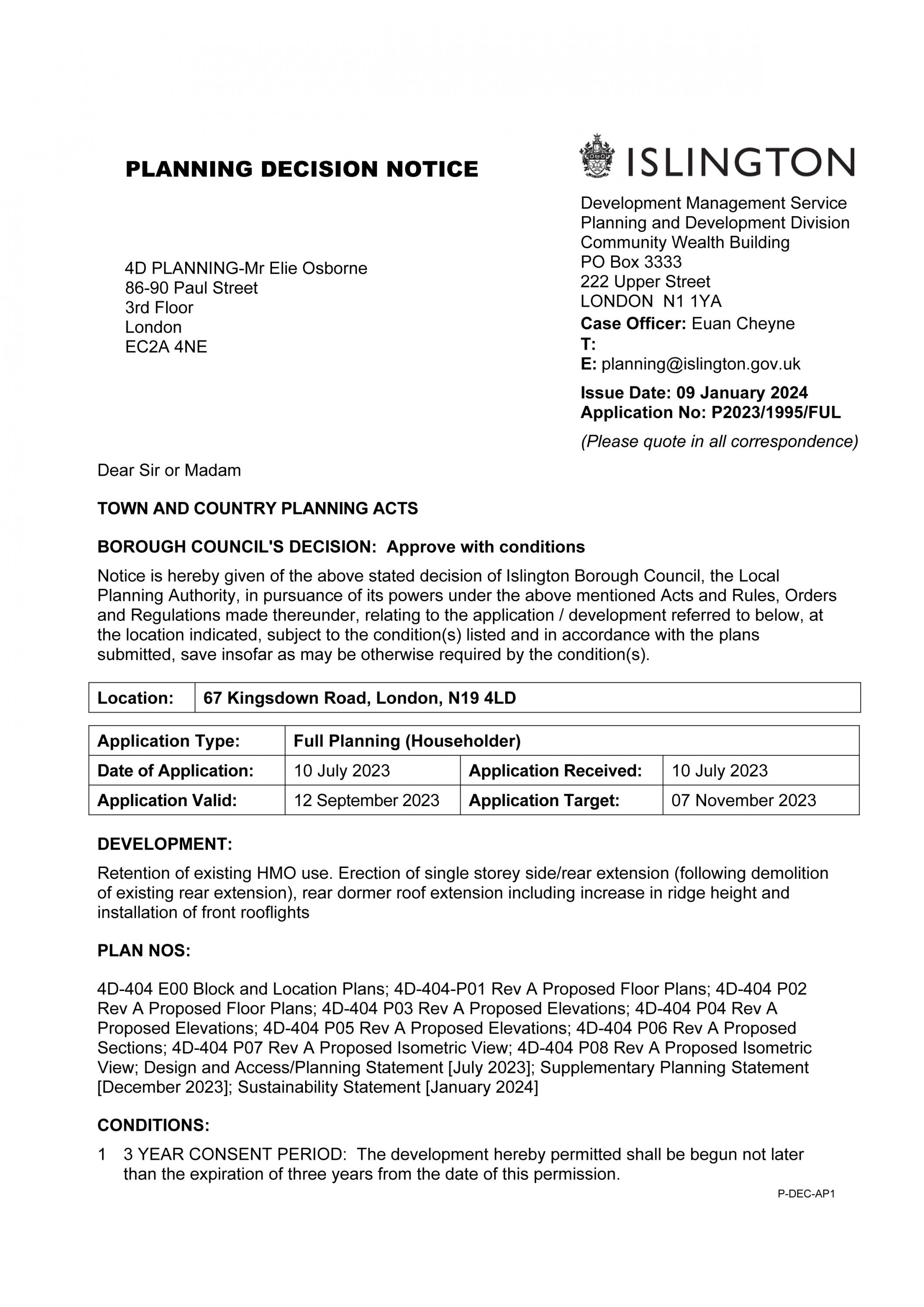
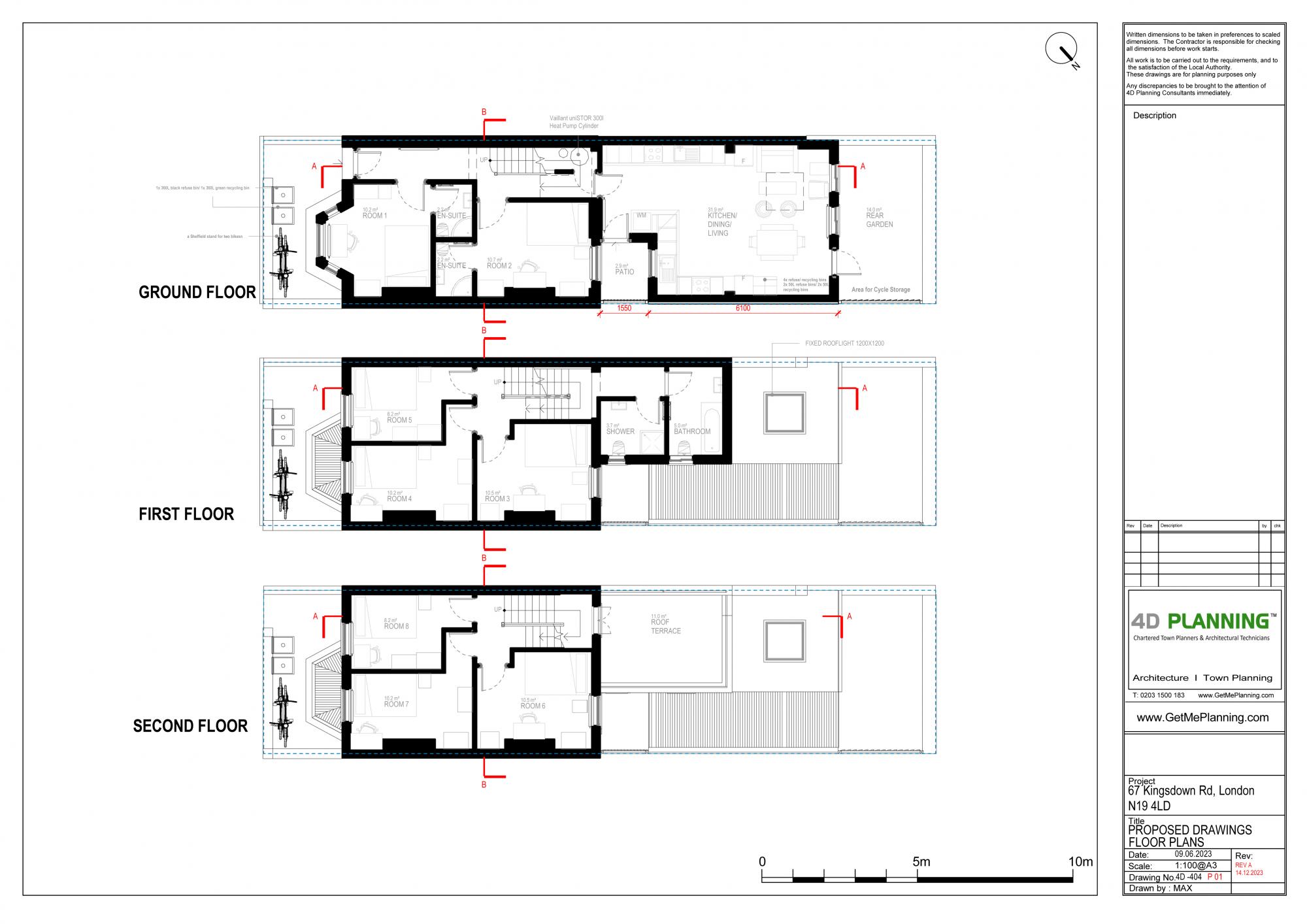
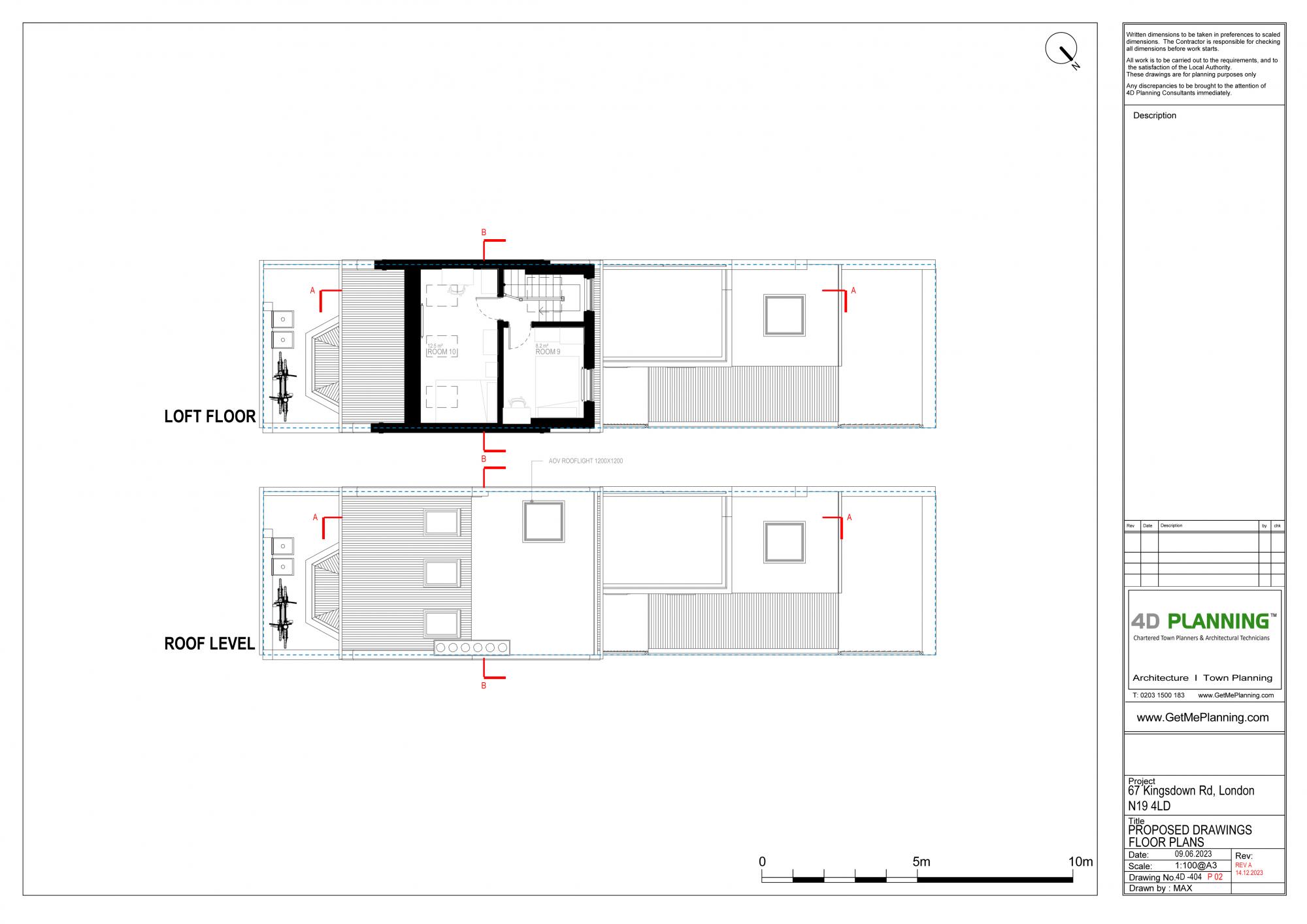
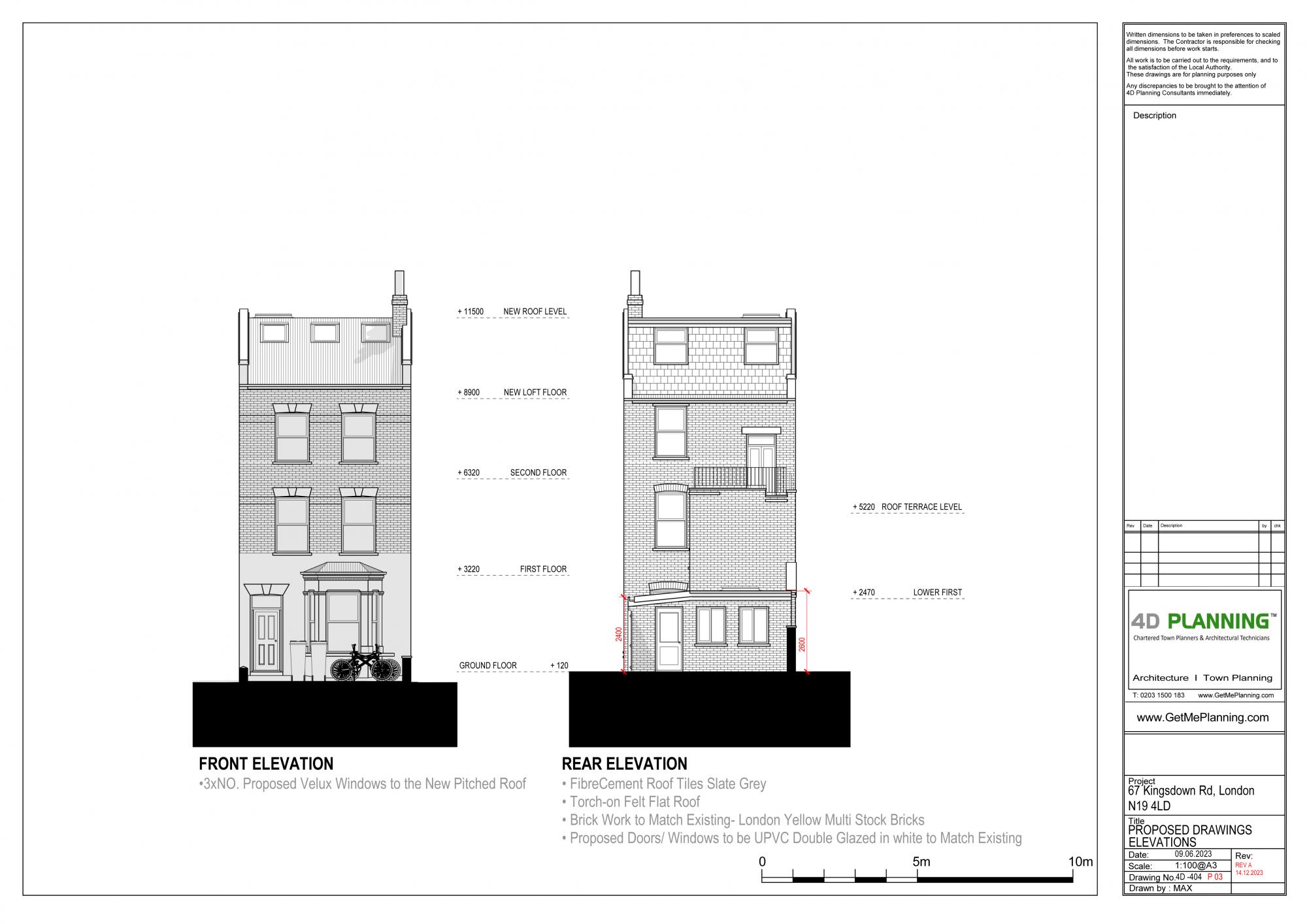
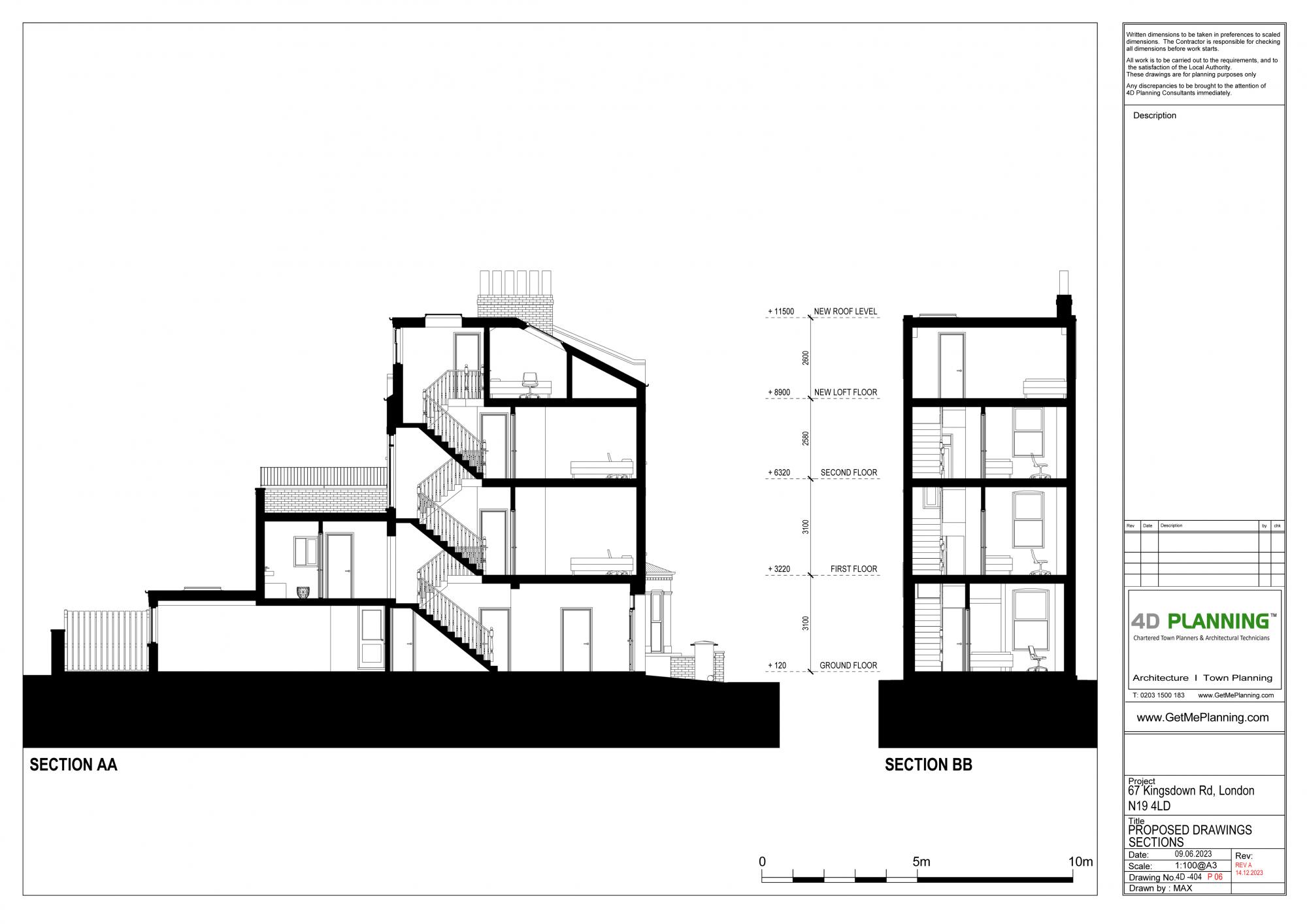
Retention of existing HMO use. Erection of single storey side/rear extension (following demolition of existing rear extension), rear dormer roof extension including increase in ridge height and installation of front rooflights.


4D Planning's role

4D Planning were instructed to assist the client with obtaining planning permission for the conversion of the former single dwelling into an HMO (house of multiple occupation). The property was already converted at the time of our instruction. We applied for a single storey extension at the rear and a large roof extension with a rear dormer, rooflights and raising the ridge of the roof height to maximise internal headroom. During the course of the application assessment, Islington Council adopted a new development plan. 4D Planning liaised with the case officer and the relevant planners to ensure the scheme was favourable and fully compliant with the latest policies and guidance. The application was approved by Islington Council.

For other similar projects in Islington see here: www.islingtonplanning.co.uk


Conversion of House into HMO Rear Extension and Roof Extension

Project Overview

The client sought to convert a three-bedroom family dwelling into a six-bedroom House in Multiple Occupation (HMO). The key objectives were to:

  • Maximise usable living space
  • Improve amenity and safety standards
  • Achieve planning consent within six months


Planning Policy and Justification

Under UK policy, HMOs must demonstrate that they are acceptable in use class C4 and protected by Article 4 directives where applicable. We:

  • Carried out a planning history review to assess any prior refusals or permitted development rights
  • Analysed local authority HMO licensing thresholds and amenity standards
  • Prepared a Planning Statement referencing NPPF Paras 119 and 130, Local Plan housing mix, and SPD guidance on HMOs


Access, Parking, and Neighbouring Impacts

We assessed access arrangements to ensure shared entrances were safe and well-lit. A detailed Transport Statement confirmed that on‑street parking and refuse collection met local council requirements. A daylight and privacy study ensured no undue impact on neighbours in line with BRE guidance.


Rear Extension Design and Planning

Site Constraints and Topography

The rear garden was narrow with a slight fall towards the rear boundary. We used this to our advantage by designing a lower-ground floor sunroom and increasing external amenity space at ground level.


Design Response

The proposed rear extension of 3m depth seamlessly links the existing kitchen to a new communal dining and lounge area. Key features include:

  • Bi-folding doors to maximise natural light
  • Green roof planting to reduce surface water run-off
  • Matching brick materials to complement the host dwelling


Planning Justification

Our Design and Access Statement demonstrated:

  • Compliance with rear projection limits under Householder Design SPD
  • Appropriate roofscape that respects neighbours’ outlook
  • Sustainable drainage solution via green roof

This integrated approach helped overcome local conservation officer concerns about design coherence.


Roof Extension Strategy

Scope and Purpose

To create further HMO bedrooms, we proposed:

  1. A dormer roof extension to the rear slope
  2. A small mansard roof extension over the existing side projection


Policy Compliance and Aesthetic Considerations

  • Dormer windows aligned with permitted development parameters for roof extensions
  • Design matched existing roofline, ensuring outward projection and ridge height remained under thresholds
  • Materials (slate and slate-effect tiles) matched nearby properties, avoiding clashing silhouettes


Light and Privacy Management

To mitigate overlooking, obscured glazing was used on flank windows and dormer positions avoided direct alignment with neighbours’ windows. This satisfied local planning and privacy standards.


Planning Application and Outcome

Pre‑Application Engagement

We held a pre‑application meeting with planning officers to validate permitted dimensions and discuss amenity and parking solutions. This feedback was integrated into the final plans.


Submission Package

The full planning application included:

  • Site and block plans
  • Floor plans and section drawings
  • Design and Access Statement with policy references (NPPF, Local Plan, SPD)
  • Daylight/private studies
  • Sustainability statement (green roof, insulation details)
  • Transport Statement and Waste Management Plan


Decision and Conditions

Planning permission was granted within ten weeks. Key conditions included:

  • Matching materials
  • Obscure glazing to flank dormers
  • Details for green roofing
  • Management plan for HMO operation

This successful outcome allowed the client to commence refurbishment, install additional bedrooms, and license the HMO under local authority standards.


Project Impact & Lessons Learned

Increased Housing Supply

The new six-bedroom HMO contributes to local housing stock while meeting demand for affordable shared housing near transport links and employment zones.


Design Integration

By respecting scale, form, materials, and amenity, the extensions appear sympathetic to the surrounding context, preserving local character and neighbouring amenity.


Clear Policy-Led Approach

Leveraging national and local policy – including householder permitted development, SPD guidance, daylight standards, and HMO regulations – enabled a positive planning outcome with minimal delay.


Conclusion

This conversion of house into HMO, combined with both rear extension and roof extension, showcases a best-practice planning approach. Rigorous site analysis, policy alignment, pre‑application engagement, and robust design justification paved the way for a timely and compliant approval. The result is a high quality, multi‑occupancy home that enhances the local environment and provides much‑needed housing. If you have a similar project that requires planning permission, reach out to us at 4D Planning and we will be delighted to help you and work with you to achieve a successful outcome.


or

Let's discuss how we can help you on your next project

Get in touch today to speak to a Chartered Planning Consultant for a free no-obligation quote


Message Us NowMessage Us
Online